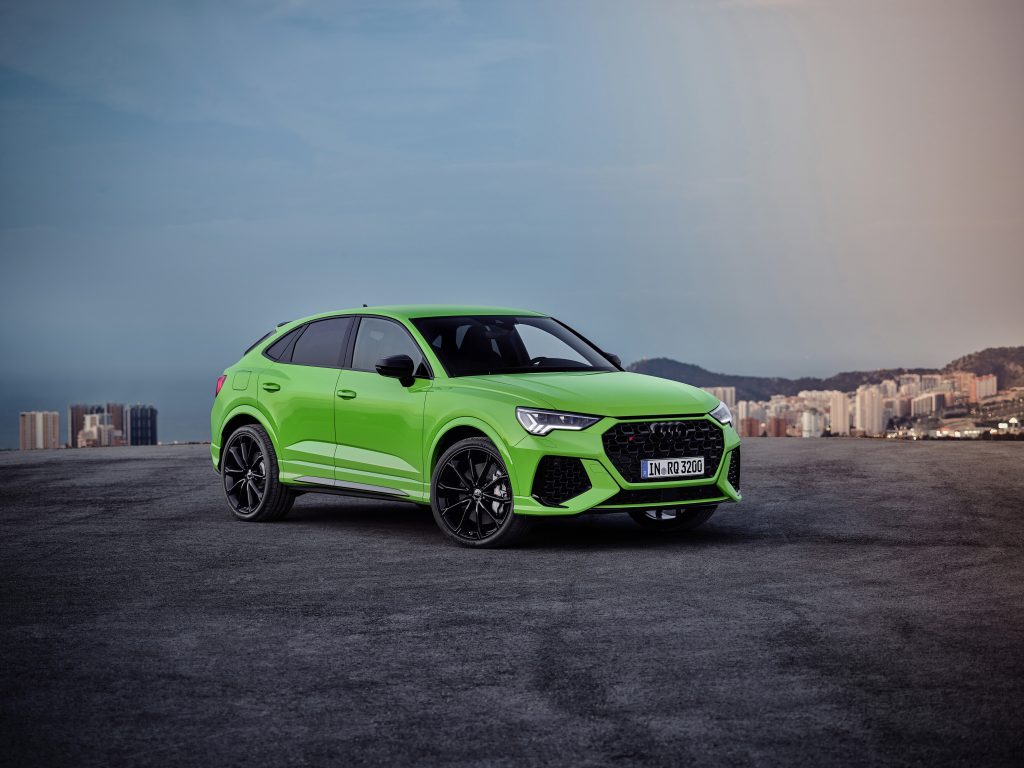
Mezzo secolo di leggenda. Il cinque cilindri Audi compie 50 anni
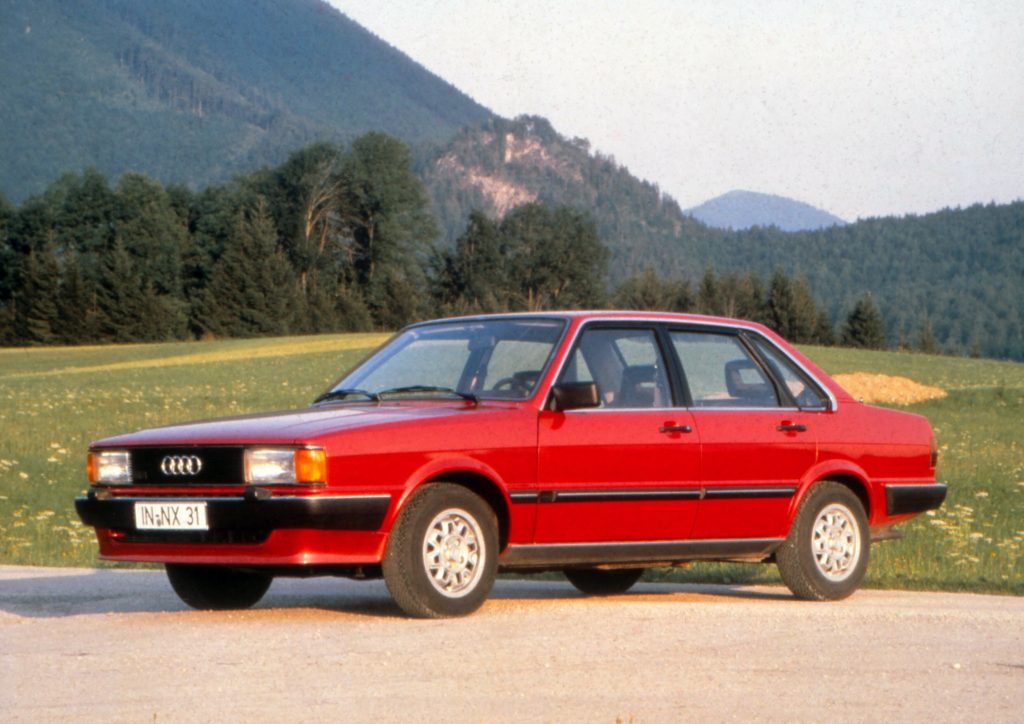
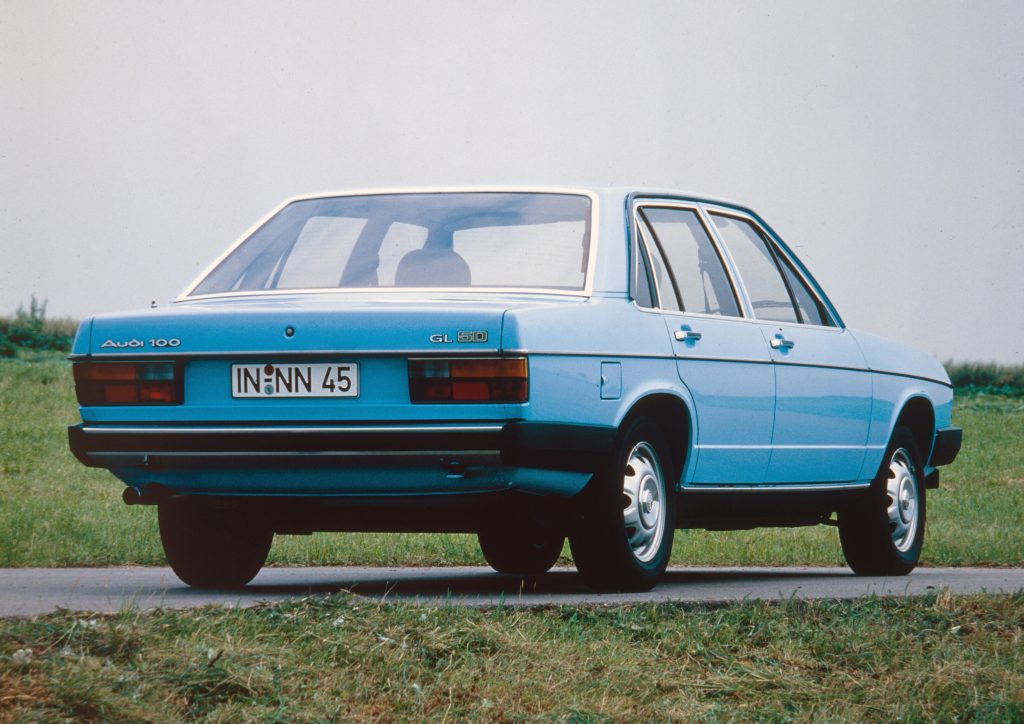
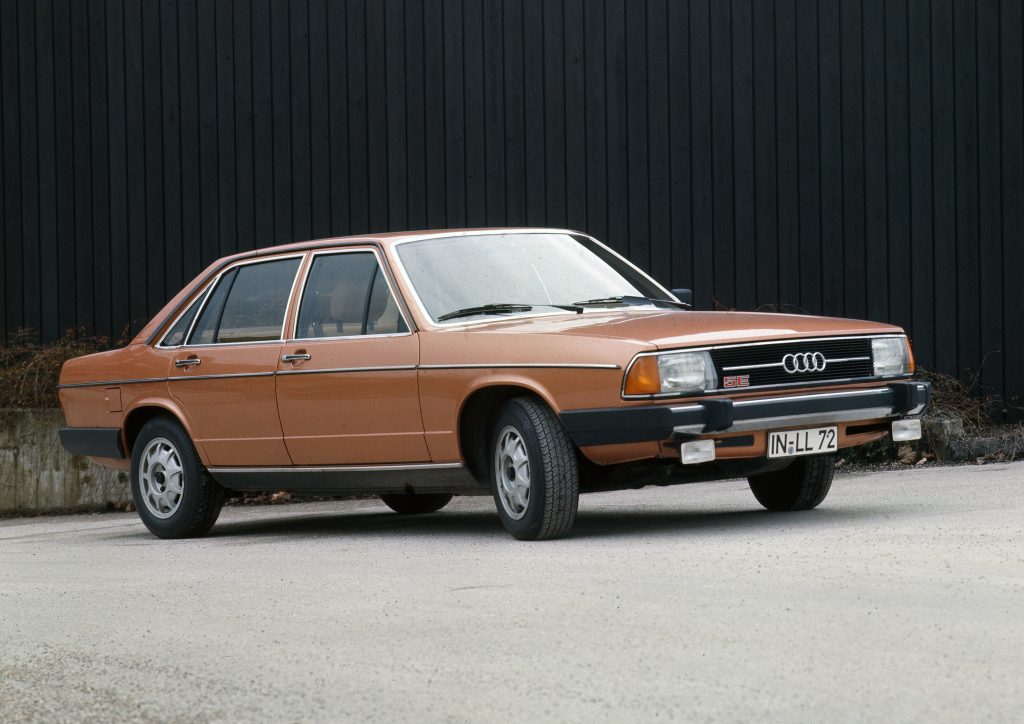
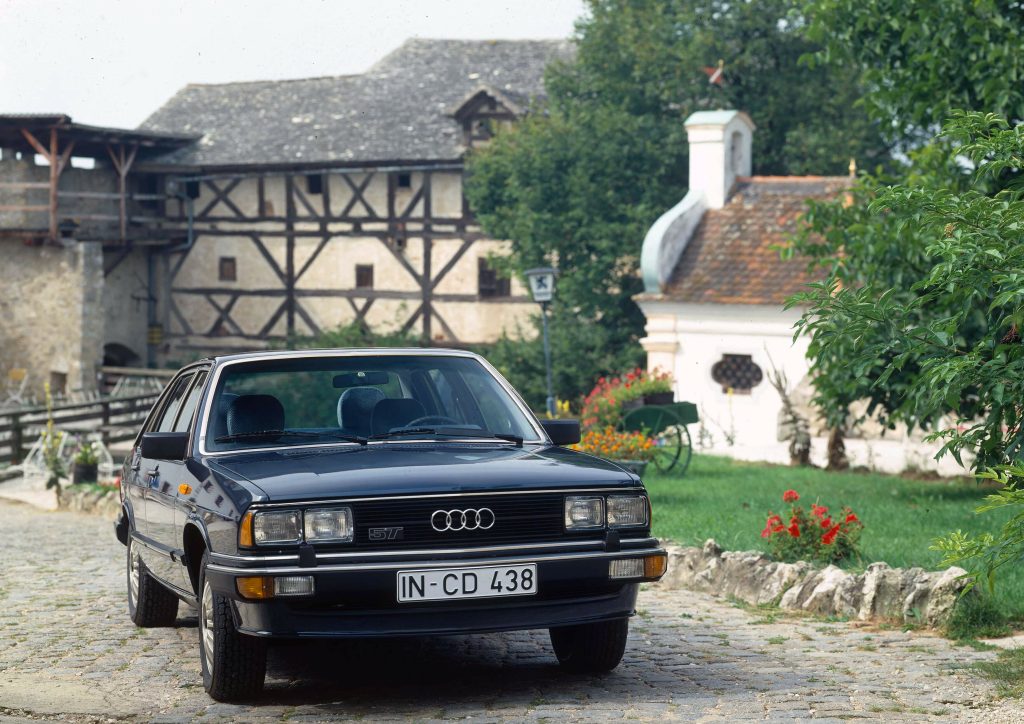
Correva l’anno 1976 quando la Audi 100 (serie C2) ricevette il primo motore cinque cilindri in linea benzina, disponibile in produzione di serie per la Casa dei quattro anelli: un 2.1 litri da 136 CV. Quella scelta – audace per l’epoca – segna l’inizio di una storia lunga decenni, in cui il frazionamento “5-cilindri” diventa una delle anime tecniche e caratteriali di Audi.
50 years of five-cylinder engines at Audi: unmistakable sound, thrilling performance, and numerous motorsport successes
Da allora, il cinque cilindri ha alternato tappe su strada e passerelle nel motorsport: versioni diesel e benzina, aspirate e turbocompresse, fino alle leggende da rally.
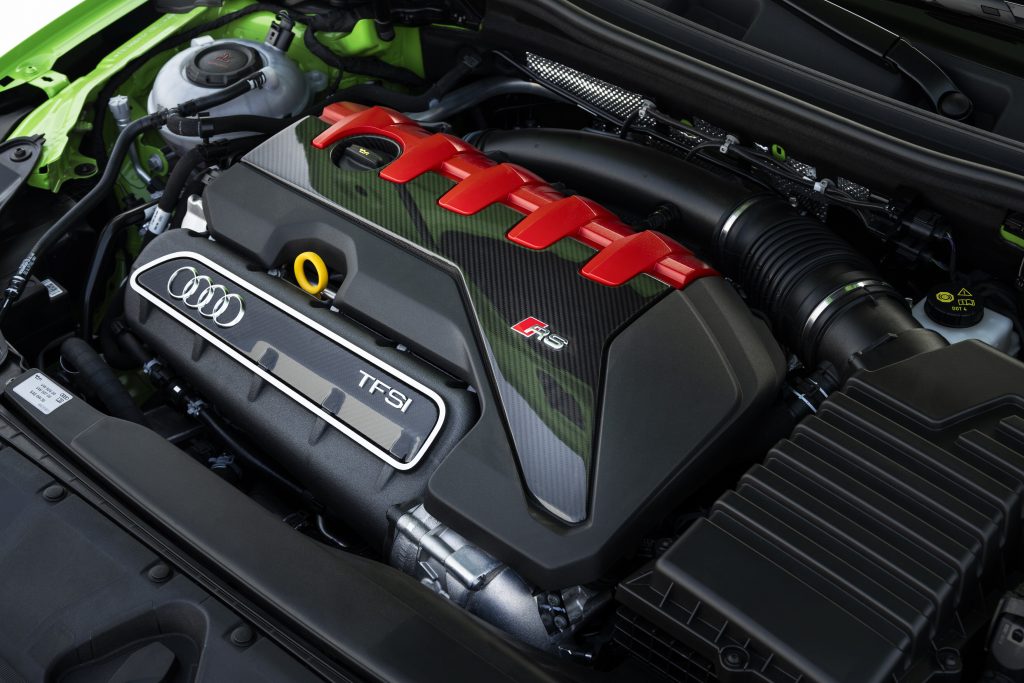
Oggi, a 50 anni di distanza, è celebrato non come un motore del passato, ma come simbolo di un patrimonio tecnico , grazie anche al suo successore moderno, il 2.5 TFSI, che ancora oggi rappresenta il massimo della sua evoluzione.
Il 2.5 TFSI — Quando il cinque cilindri dimostra di essere evergreen
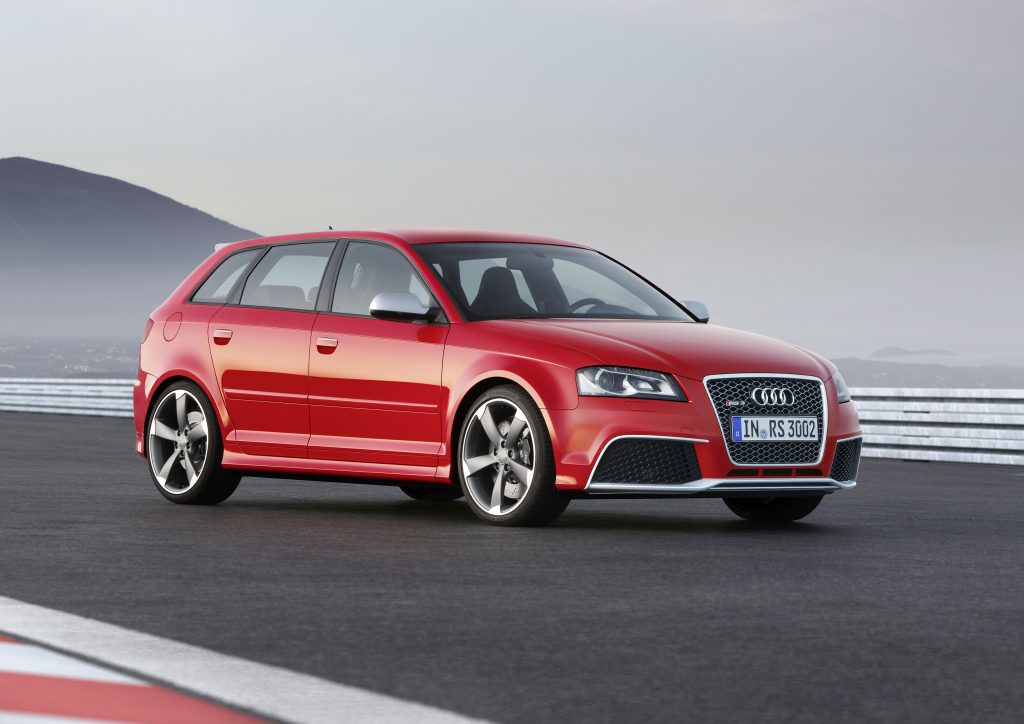
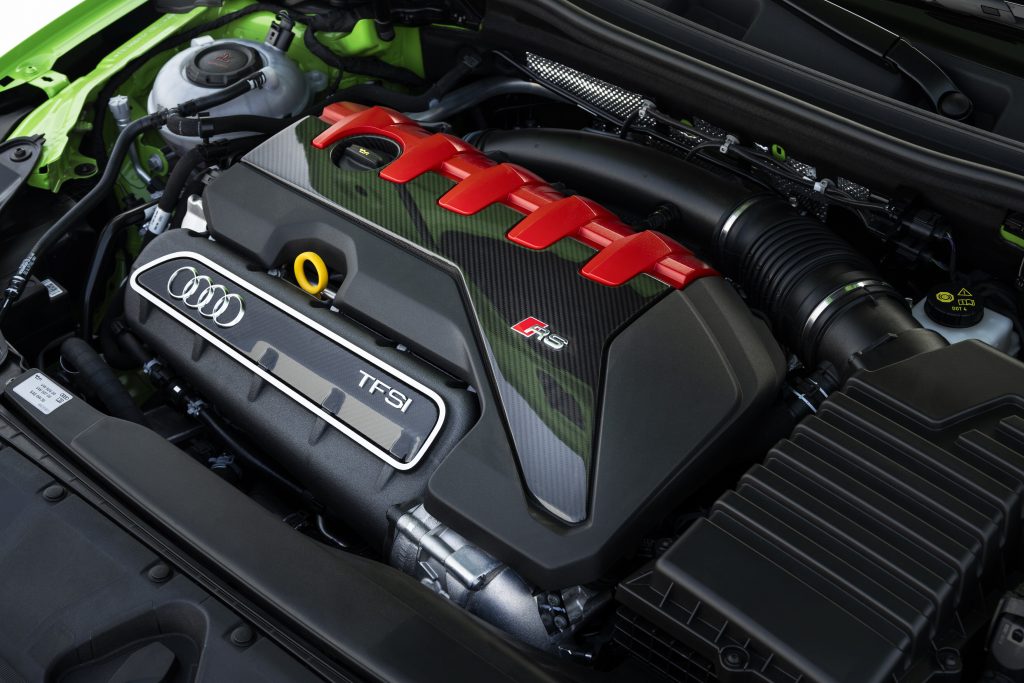
La versione più evoluta il 2.5 TFSI, da anni è un punto di riferimento per performance e carattere. Montato su modelli come Audi RS 3, continua a incarnare lo spirito sportivo del brand.
Con il suo schema inedito di accensione (1-2-4-5-3), restituisce un sound inconfondibile: un ruggito profondo, con vibrazioni e timbro unici che ben rappresentano l’anima del cinque cilindri.
Dal 2009 anno del suo ritorno in gamma fino a oggi il 2.5 TFSI ha segnato epoche: evoluto, alleggerito, più efficiente e potente. In alcune versioni supera i 400 CV, dimostrando quanto si possa spingere un progetto “storico” restando moderni.
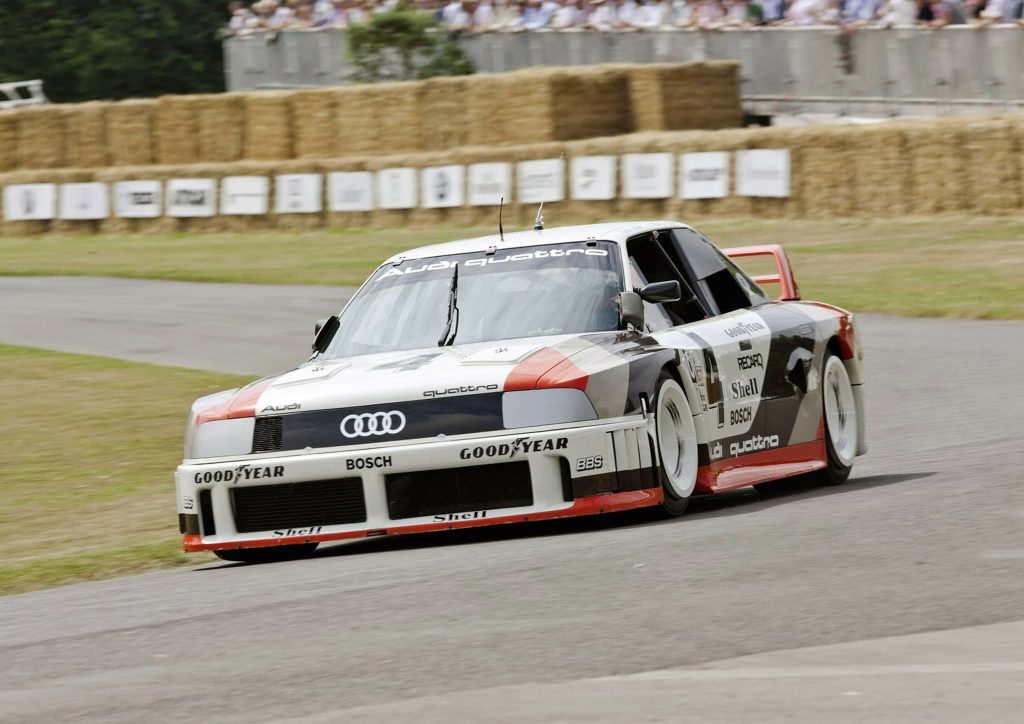
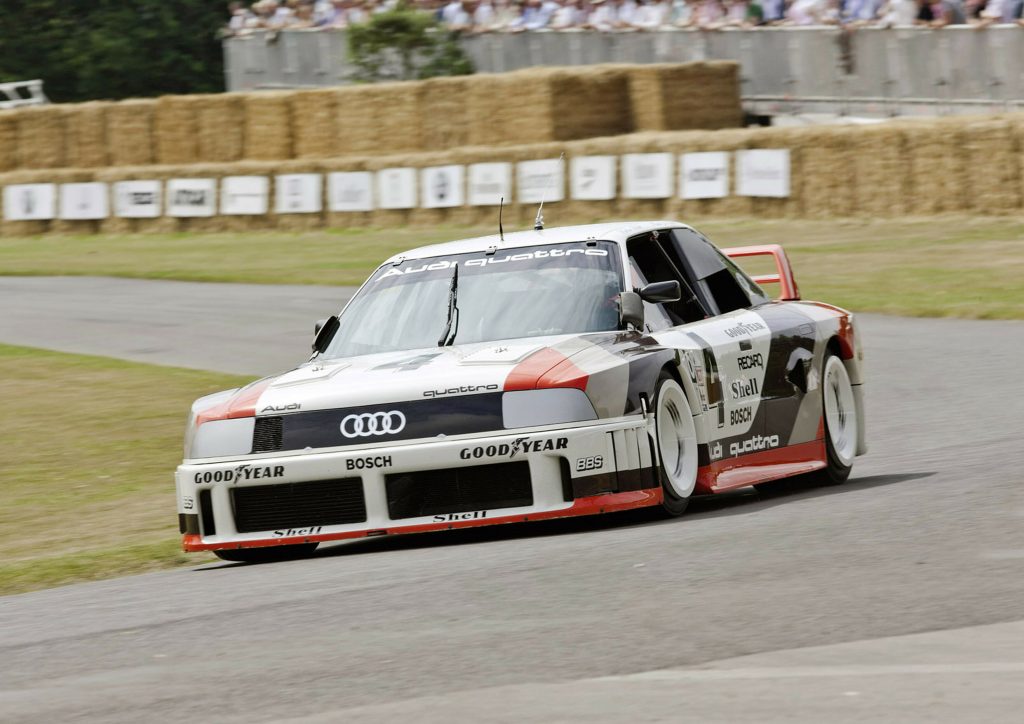
1989: most powerful five-cylinder works engine in motorsport:
At the 1989 IMSA GTO in the USA, the Audi 90 quattro competes in its races with the most powerful fivecylinder works engine. The turbocharged aluminum engine is a 2.2-liter high-performance unit specially designed for racing. It develops 530 kW (720 hp) at 7,500 revolutions per minute and delivers 720 newton meters (531.04 lb-ft) of torque at 6,000 rpm. Overall, the Audi 90 quattro IMSA GTO wins seven races in the American touring car series in the 1989 season.
Il presente e il futuro: una leggenda con la valigia pronta
Celebrando i 50 anni di questa icona , c’è anche consapevolezza: il panorama dell’automotive sta cambiando, tra elettrificazione e normative sempre più stringenti. In un mondo che corre verso il bit e i kilowatt elettrici, il cinque cilindri resta un’icona forse l’ultima legata profondamente alla tradizione termica.
Timeline – 50 anni del 5 cilindri Audi
1976 – Nasce il primo cinque cilindri Audi Debutta sull’Audi 100 (C2): 2.1 litri, iniezione meccanica, 136 CV. È il primo 5 cilindri montato su un’auto tedesca di grande serie.
1978 – Arriva il diesel 5 cilindri Audi introduce il 2.0 cinque cilindri turbodiesel: un’innovazione assoluta nel segmento.
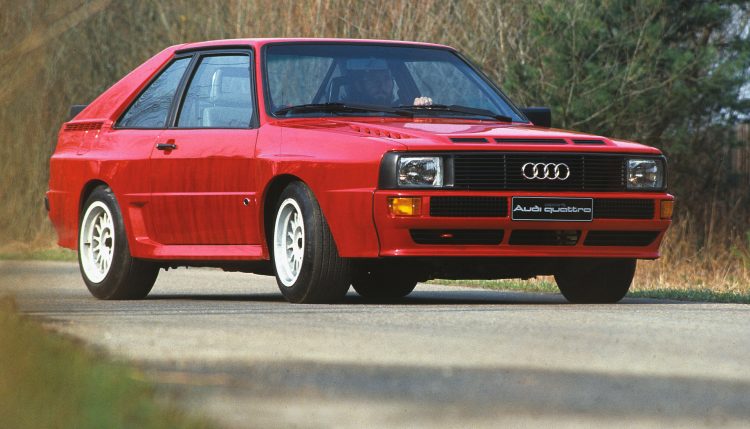
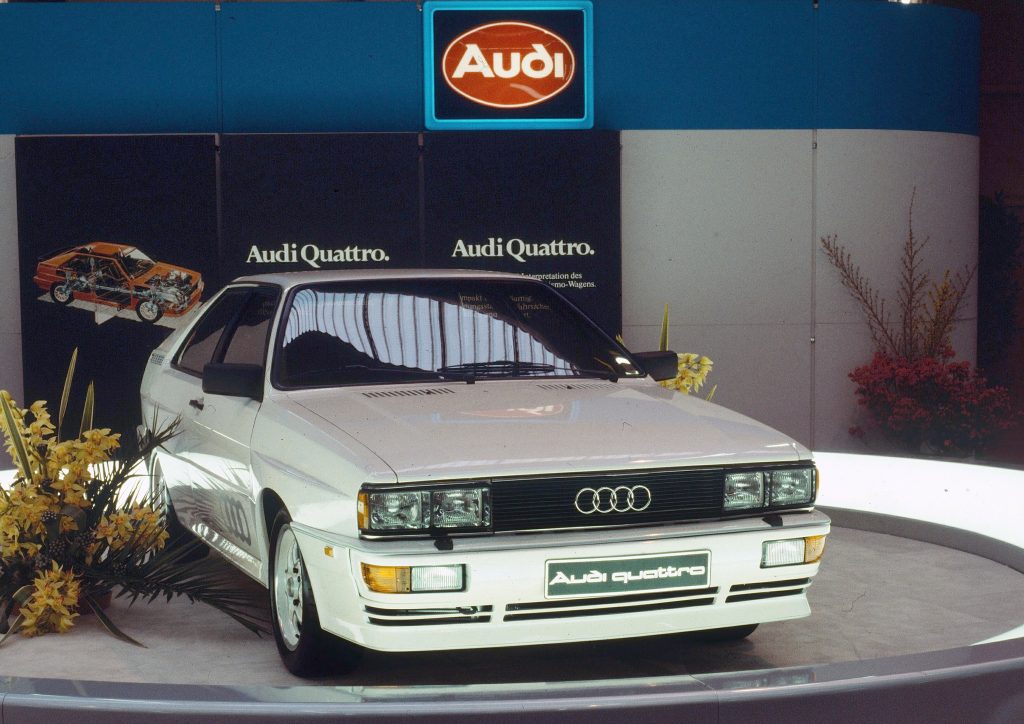
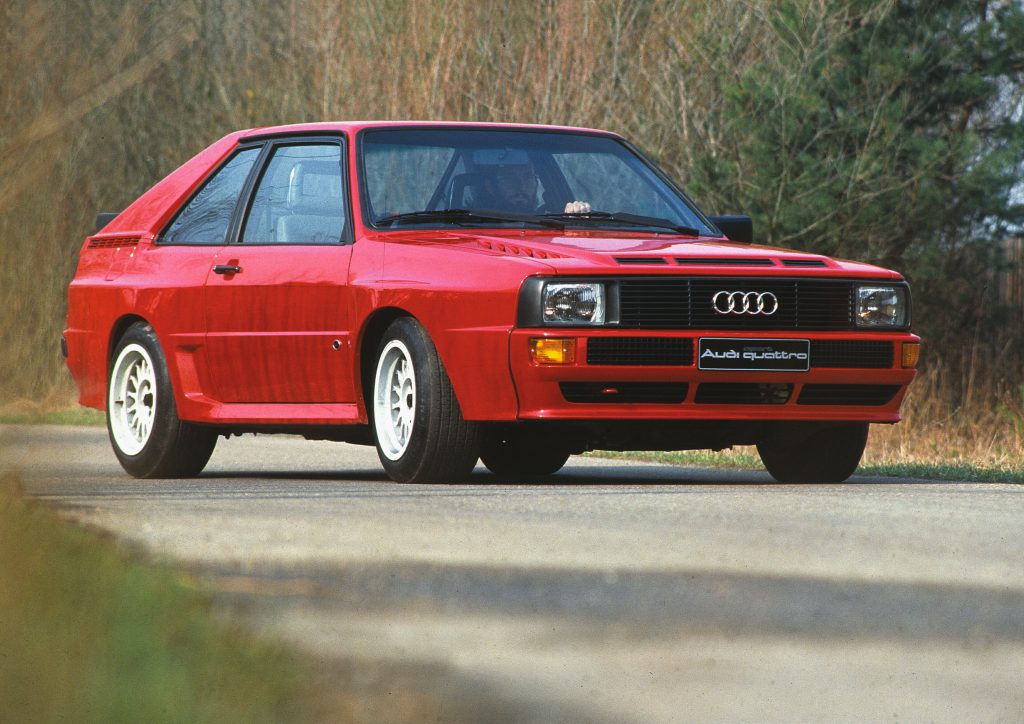
1980 – Audi quattro: il mito Sull’Audi quattro esplode l’era della trazione integrale. Il 5 cilindri turbo 2.1 da 200 CV diventa un’icona.
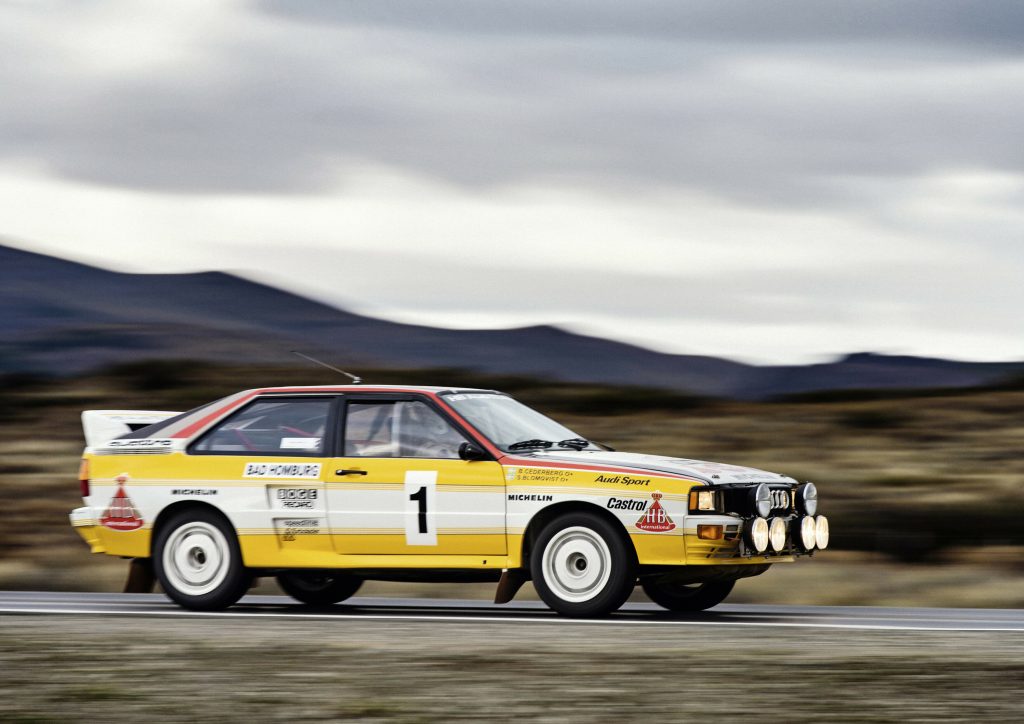
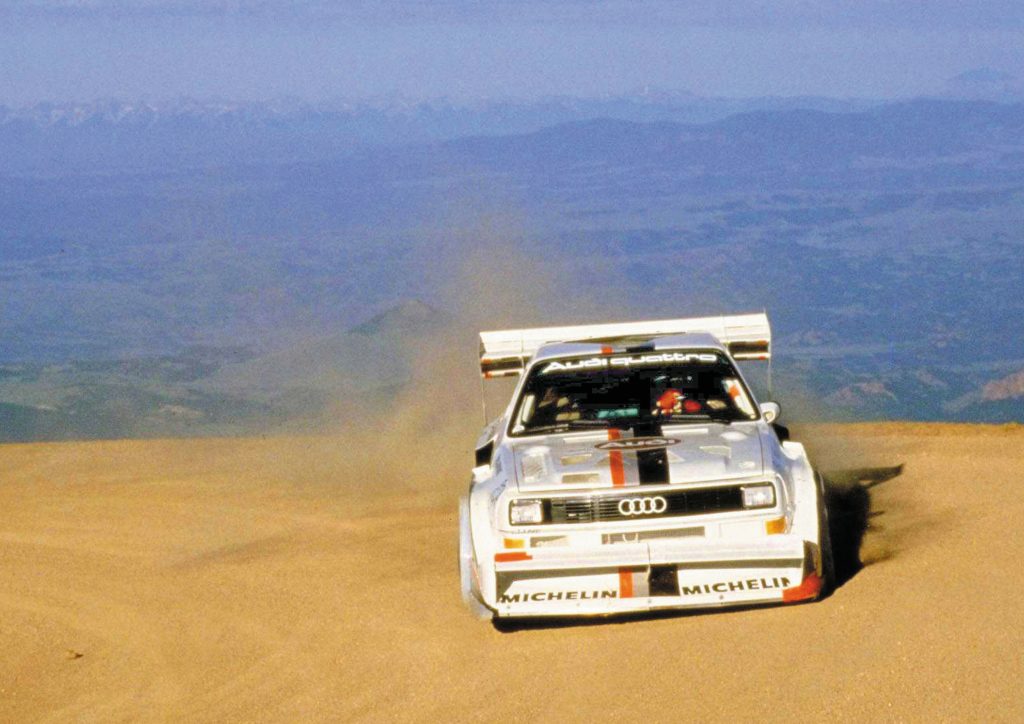
1981–1986 – Rally Gruppo B & S1 Versioni evolute sfiorano e superano i 500 CV nelle epiche Sport quattro e Sport quattro S1. Il 5L diventa leggenda mondiale.
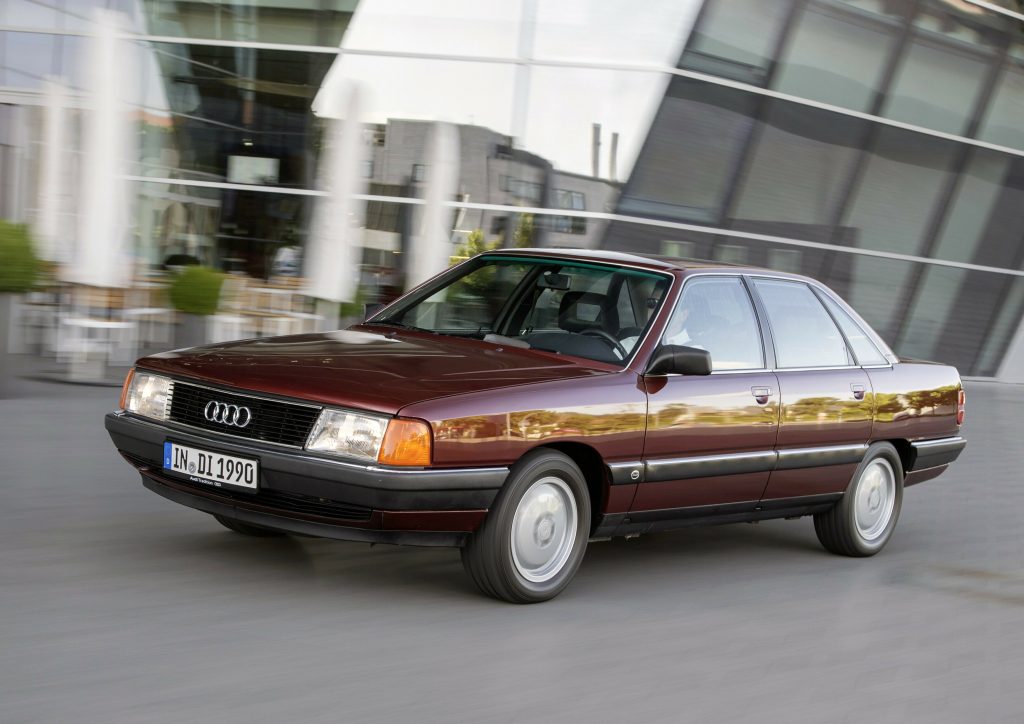
1989 – Prima Audi con 5 cilindri TDI Il 2.5 TDI porta la raffinatezza del layout a gasolio nel premium.
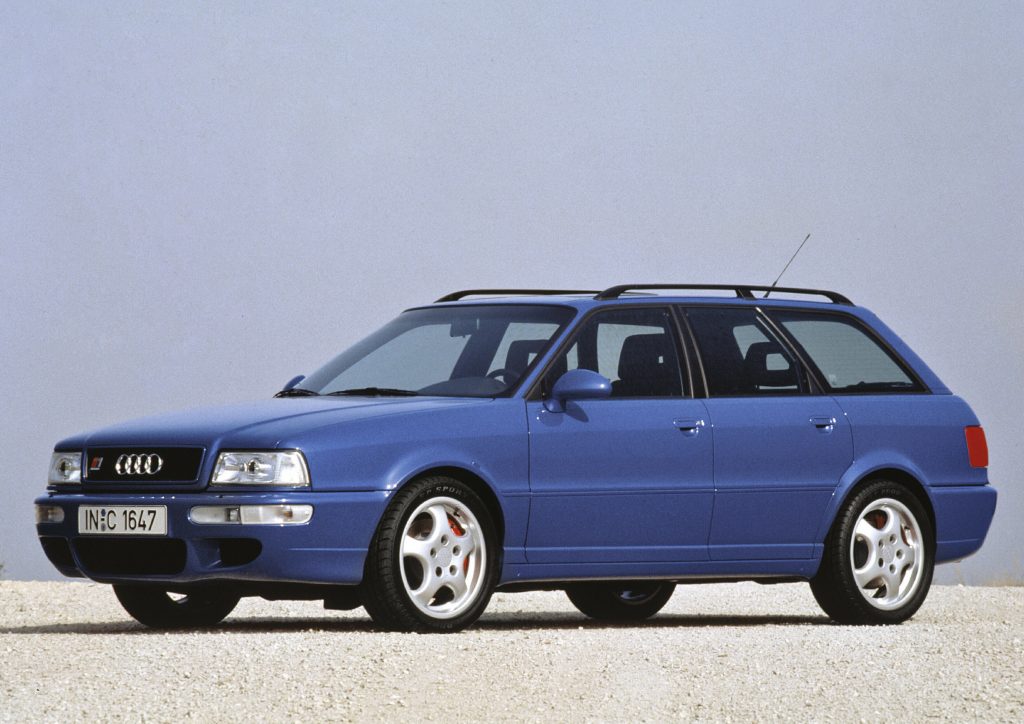
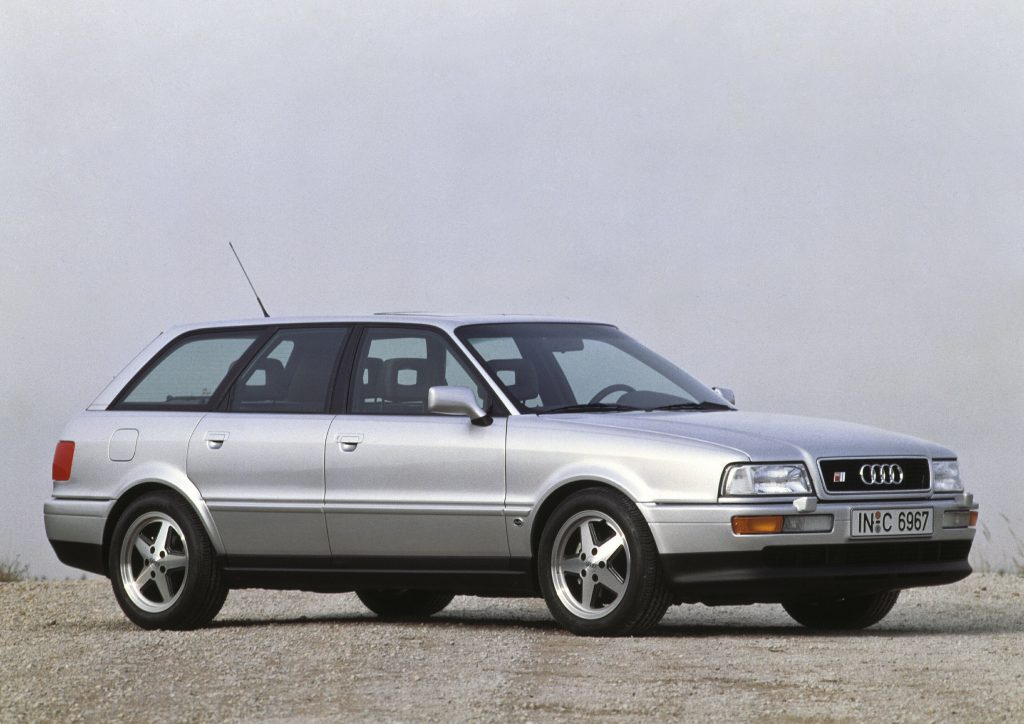
1994 – Audi RS 2 Avant Primo modello RS della storia. 2.2 cinque cilindri turbo da 315 CV sviluppato con Porsche. Diventa subito cult.
2009 – Rinasce il mito: 2.5 TFSI Nuova generazione turbo-benzina. Debutto sulla TT RS con 340 CV. È l’inizio dell’era moderna del 5 cilindri.
2011–2023 – Un premio dopo l’altro Il 2.5 TFSI viene eletto “International Engine of the Year” per nove volte consecutive nella sua categoria. Riconosciuto come uno dei migliori motori mai costruiti.
2017 – Audi RS 3 / TT RS da 400 CV Il 2.5 TFSI raggiunge 400 CV: il 5 cilindri più potente mai prodotto in serie.
2024 – Audi RS 3 aggiornata Il 5 cilindri torna ancora migliorato: più pronto, più preciso, più emozionante. Il canto irregolare 1-2-4-5-3 è ormai un marchio di fabbrica.
1978: five-cylinder carbureted engine:
In April 1978, the five-cylinder carbureted version with an output of 85 kW (115 hp) replaces the basic twoliter four-cylinder version in the Audi 100 (C2). The new 1.9-liter unit produces maximum power at 5,400 revs and delivers 154 newton meters (113.58 lb-ft) of torque to the crankshaft at 3,700 rpm. The engine is used in the Audi 100 5 (C2), the Audi 80 CD (B2), the Audi Coupé GT 5S (B2) and in the Audi 100 (C3).1989: most powerful five-cylinder works engine in motorsport:
At the 1989 IMSA GTO in the USA, the Audi 90 quattro competes in its races with the most powerful fivecylinder works engine. The turbocharged aluminum engine is a 2.2-liter high-performance unit specially designed for racing. It develops 530 kW (720 hp) at 7,500 revolutions per minute and delivers 720 newton meters (531.04 lb-ft) of torque at 6,000 rpm. Overall, the Audi 90 quattro IMSA GTO wins seven races in the American touring car series in the 1989 season.1978: first five-cylinder diesel:
In 1978, Audi presents its first diesel model for the Audi 100 (C2). The five-cylinder naturally aspirated engine with a displacement of two liters develops 51 kW (70 hp) and 123 newton meters (90.72 lb-ft) of torque. It also powers the next-generation C3, propelling both the sedans and the Avant versions. From 1984, there is a turbocharged engine with an output of 64 kW (87 hp) and 172 newton meters (126.86 lb-ft) of torque.1976: first five-cylinder gasoline engine in the automotive industry:
In August 1976, Audi introduces the second-generation Audi 100 (C2) in Luxembourg. For the first time, power is provided by a five-cylinder gasoline engine in a model from the brand with the four rings. The fuel-injected engine with a displacement of 2,144 cc develops 110 kW (136 hp) at 5,700 revolutions per minute. The maximum torque of 185 newton meters (136.45 lb-ft) is available at 4,200 rpm. The market launch of the Audi 100 (C2) follows in March 1977. From September 1979, the five-cylinder engine is also available in the Audi 200; from August 1982, it is fitted in the successor to the C2, the Audi 100 C3.1989: first five-cylinder turbocharged direct-injection diesel engine in a production car:
Audi presents another milestone in the automotive history in 1989 at the International Motor Show in Frankfurt am Main: the Audi 100 TDI. The first fivecylinder turbocharged diesel with direct injection for a production car produces 88 kW (120 hp) from a displacement of 2.5 liters and delivers 265 newton meters (195.45 lb-ft) of torque to the crankshaft. It is used in the C3 and in the C4 – from 1994 with an output of 103 kW (140 hp) and 290 newton meters (213.89 lb-ft) of torque.1980: five-cylinder gasoline engine with turbocharger:
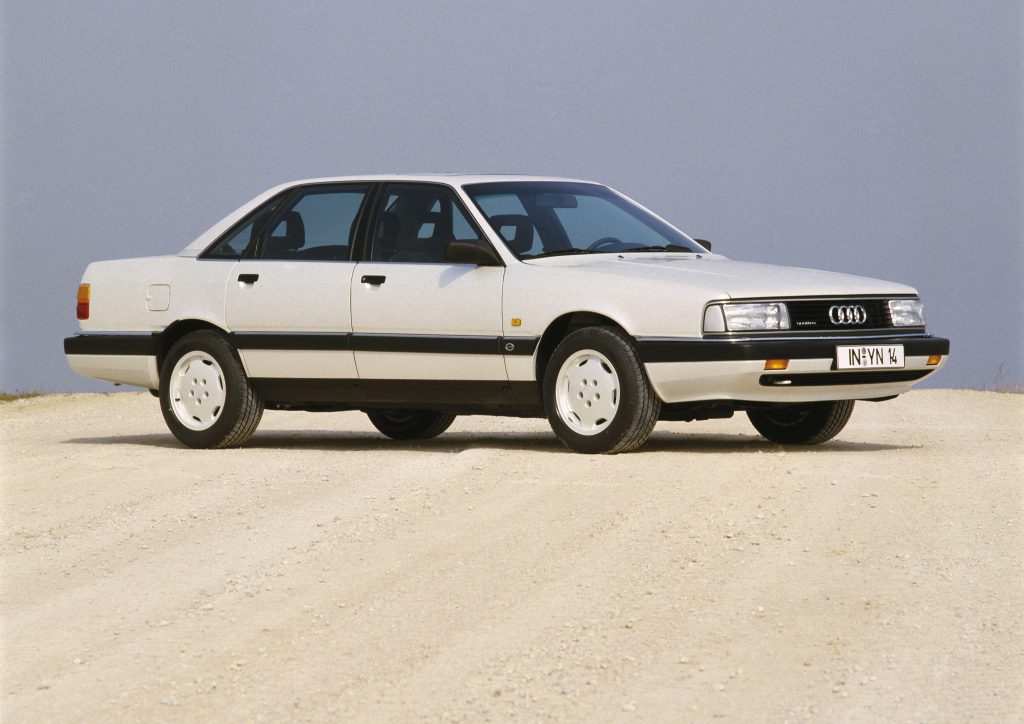
In 1980, the Audi 200 5T (C2) comes on to the market, which is powered by the first turbocharged gasoline engine from the brand with the four rings. From a displacement of 2,144 cc, the five-cylinder unit produces 125 kW (170 hp) at 5,300 revolutions per minute and 265 newton meters (195.45 lb-ft) of torque at 3,300 rpm. The Audi 200 5T (C2) is the first Audi in the luxury class and features the lavish equipment of the Audi 100 CD as standard.1988: five-cylinder gasoline engine with four-valve technology, turbocharger and catalytic converter (S engine):
With two catalytic converters, four-valve technology, a closed tank venting system and a diagnostic system, this powerplant offers a very high standard of emissions control and technology. It is first available in the Audi 200 quattro 20V (C3), then in the Audi quattro 20V (B2) a year later and in the Audi S2 Coupe (B3) in 1990. The five-cylinder turbocharged engine has a displacement of 2,226 cc and delivers 162 kW (220 hp) at 5,700 revolutions per minute and 309 newton meters (227.91 lb-ft) of torque at 1,950 rpm.1994: first five-cylinder RS engine:
In 1994, the most powerful five-cylinder production engine built by Audi to date goes into action in the Audi Avant RS 2 (B4). With turbocharging, fuel injection and standard-fit emissions control, it produces 232 kW (315 hp) at 6,500 revolutions per minute from a displacement of 2,226 cc and delivers 410 newton meters (302.40 lb-ft) of torque at 3,000 rpm.1984: map-controlled five-cylinder gasoline engine with emissions control as standard:
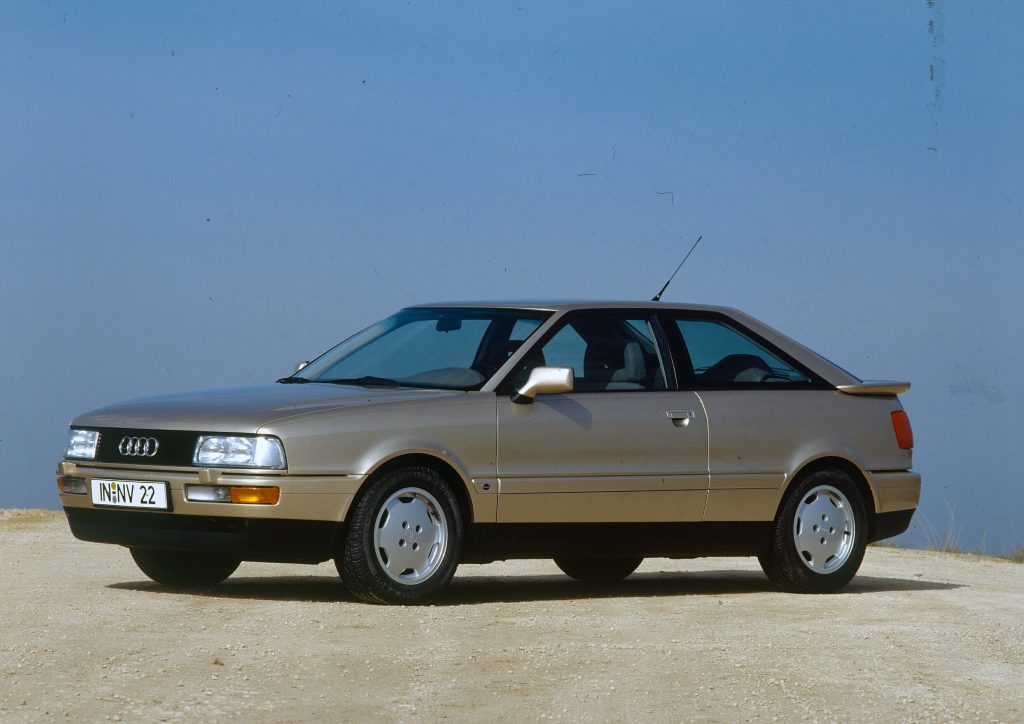
In 1984, a completely new development appears. Audi is the first manufacturer to optimize the five-cylinder engine with a fully electronic map-controlled ignition system and a catalytic converter as standard. From 2,309 cc, it produces 100 kW (136 hp) at 5,600 rpm and 188 newton meters (138.66 lb-ft) of torque at 3,500 revolutions per minute. The most widely used five-cylinder engine from Audi is found in the Audi 100 2.3E (C3), the Audi Coupe 2.3E (B3) and in the Audi 90 2.3 E (B3). From 1990, it also powers the Audi 100 2.3E (C4) and a year later the Audi 80 2.3E (B4) and the Audi Cabriolet 2.3E. Here, it delivers 98 kW (133 hp) at 5,600 revolutions per minute and 186 newton meters (137.19 lb-ft) at 4,000 rpm.1980: five-cylinder gasoline engine with turbocharger and intercooler:
In 1980 at the Geneva Motor Show, Audi unveils the Audi quattro (B2), known as the “Ur-quattro” from the mid-1990s. It uses the powerplant from the Audi 200 5T (C2), but features an intercooler. As a result, the turbocharged engine achieves a higher output of 147 kW (200 hp) at 5,500 revolutions per minute and 285 newton meters (210.21 lb-ft) of torque at 3,500 rpm. The body of the Audi quattro is based on the Audi Coupe (B2), which in turn is based on the Audi 80. Flared fenders, bulkier bumpers and sills as well as a larger rear spoiler distinguish the Audi quattro from the Coupe.1983: five-cylinder engine triumphant in rallying:
In the 1983 Corsica Rally, Audi competes for the first time with the Audi quattro A2, Group B. Its 2.1-liter turbocharged five-cylinder inline engine produces 265 kW (360 hp) at 6,500 revolutions per minute and delivers 450 newton meters (331.90 lb-ft) of torque at 4,000 rpm. At the end of the season, the Finn Hannu Mikkola wins the drivers’ title in this car. One year later, the Swede Stig Blomqvist replicates this success: he becomes world rally champion, while Audi wins the manufacturers’ world rally championship for the second time after 1982.2009: 2.5 TFSI with gasoline direct injection, turbocharger and intercooler:
30 years after the first five-cylinder turbocharged gasoline engine was presented, Audi once again introduces a model with a five-cylinder gasoline engine and turbocharger at the Geneva Motor Show: the TT RS. The powerplant delivers 250 kW (340 hp) at 6,500 revolutions per minute from 2,480 cc and 450 newton meters (331.90 lb-ft) at 5,300 rpm. From 2011, this engine is also used in the RS 3 Sportback and from 2014 in the updated RS Q3. In the 2012 TT RS plus, the engine produces 265 kW (360 hp) at 6,700 revolutions per minute and develops 465 newton meters (342.97 lb-ft) of torque at 5,400 rpm.1991: performance-enhanced five-cylinder S engine with overboost control:
In the 1991 Audi S4, the Sport version of the Audi 100 (C4), a turbocharged 2.2-liter 20-valve five-cylinder inline engine is at work. It develops 169 kW (230 hp) at 5,900 rpm. Thanks to a brief increase in boost pressure, a peak torque of 350 newton meters (258.15) is achieved at 1,950 revolutions per minute. The engine also powers the Audi S2 Avant (B4) and the Audi S2 Coupé (B3). In 1994, the Audi S4 becomes known as the Audi S6.1983: five-cylinder gasoline engine with four-valve technology, turbocharger and intercooler:
In September 1983, Audi presents the Audi Sport quattro (B2) at the International Motor Show in Frankfurt am Main. It is powered by a 2.1-liter highperformance engine with four-valve technology that produces 225 kW (306 hp) at 6,700 revolutions per minute. The maximum torque of 350 newton meters (258.15 lb-ft) is available at 3,700 rpm. Delivery commences in May 1984. The Audi Sport quattro (B2) is a special series limited to 214 vehicles, produced to meet homologation requirements for rallying. The rules stipulate that displacement must be limited to a maximum of 2,133 cc.1987: world record at Pikes Peak with the Audi Sport quattro S1 (E2):
In 1987, Walter Röhrl wins the legendary Pikes Peak Hill Climb (USA) in the Audi Sport quattro S1 (E2), setting a new record. In 10 minutes and 47.85 seconds he conquers the almost 20-kilometer-long (12.43 mi) course with 156 bends and a difference in altitude of 1,439 meters (4721.13 ft). The 2.1-liter five-cylinder engine in the Audi Sport quattro S1 (E2) delivers 440 kW (598 hp) at 8,000 revolutions per minute and produces 590 newton meters (435.16 lb-ft) of torque at 5,500 rpm.2010: Audi TT RS in races:
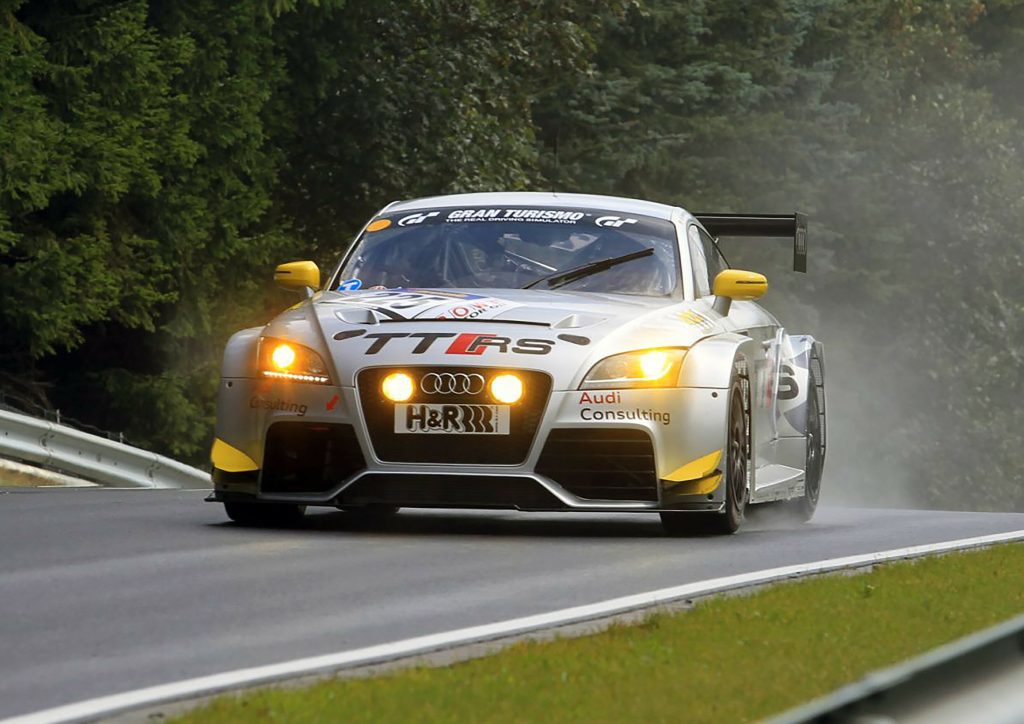
In 2010, Audi starts its motorsport activities with the TT RS. The racing car developed for endurance racing is powered by the five-cylinder engine from the production model. Following improvements to the intercooler and exhaust system, the powerplant delivers 280 kW (380 hp) at 5,800 revolutions per minute. The maximum torque of 500 newton meters (368.78 lb-ft) develops at 2,500 rpm. In the VLN Endurance Championship of 2010 and 2011, the frontwheel-drive racing car notches up several victories in the SP4T class up to 2.5 liters’ capacity. In August 2011, it clinches overall victory in the 6-hour race on the Nürburgring. Audi achieves further success with the
TT RS in the 24-hour race in the Eifel in 2011, where it takes class victory.50 years of five-cylinder engines at Audi: unmistakable sound, thrilling performance, and numerous motorsport successesAudi RS Q3 Sportback, model year 2019